$110.00–$210.00Price range: $110.00 through $210.00
References: Product information from 39.net drug database; supplier specifications (Biomart.cn); clinical applications in chronic hepatitis B treatment (as per 日达仙®说明书); immunomodulatory mechanisms in infectious disease research.
Thymosin Alpha-1 is a synthetic peptide corresponding to the N-terminal 28-amino acid fragment of thymosin α1, a naturally occurring thymic hormone. It is characterized by an acetylated N-terminus and multiple acidic residues (Asp, Glu), which contribute to its stability and biological activity. As a highly conserved peptide, it exhibits cross-species activity and is resistant to proteolytic degradation, making it suitable for therapeutic and research applications.
⚙️ Mechanism of Action
Immunomodulation: Enhances T-cell maturation and differentiation, particularly promoting the development of naive T-cells into cytotoxic T-lymphocytes (CTLs) and helper T-cells (Th1/Th2).
Cytokine Regulation: Stimulates the production of interferon-α, interleukin-2 (IL-2), and tumor necrosis factor-α (TNF-α), thereby boosting innate and adaptive immune responses.
Antigen Presentation: Improves dendritic cell function, facilitating the presentation of antigens to T-cells and enhancing immune surveillance against viral infections and tumors.
Anti-inflammatory Activity: Modulates the balance between pro-inflammatory and anti-inflammatory cytokines, reducing excessive immune activation while maintaining pathogen-specific responses.
📊 Research Applications
Infectious Diseases: Studies on chronic viral infections (e.g., hepatitis B, hepatitis C, HIV) to enhance antiviral immune responses.
Oncology: Investigation of immunotherapeutic strategies for cancer, including combination therapy with checkpoint inhibitors or vaccines.
Immunodeficiency Disorders: Research on primary and secondary immunodeficiencies, such as those associated with aging, chemotherapy, or chronic illness.
Vaccine Adjuvant: Evaluation of its ability to enhance the efficacy of viral vaccines (e.g., influenza, hepatitis B) in immunocompromised individuals.
💡 Product Features
Stability: Lyophilized form stable for 24 months at 2-8°C; reconstituted solutions (with sterile water) stable for 24 hours at room temperature or 7 days under refrigeration.
Administration: Typically administered via subcutaneous injection, with a recommended dosage of 1.6mg twice weekly for immune enhancement.
Safety Profile: Low toxicity with minimal side effects, primarily mild injection site reactions (e.g., redness, swelling).
Clinical Relevance: Approved in multiple countries for the treatment of chronic hepatitis B and as an immune booster in cancer patients undergoing chemotherapy.
⚠️ Disclaimer
For Research Use Only: Not approved for human clinical use in all jurisdictions. Handling requires compliance with peptide research protocols, including proper reconstitution and disposal of contaminated materials.
None of our HGH lines are inherently better than the other. Each batch comes with a corresponding test report. Purity and dimer can be a decent proxy for “quality”, you want purity as high as possible and dimer as low as possible. The main factor to consider in our opinion, is the price per IU. Supreme is usually the best bang for buck option. Historically, Supreme & Deluxe have shown lower dimer content, although this may not always be the case, so of course reference the corresponding test reports.
For HGH, we typically recommend 1ml for every ~10 IU in the vial. If a batch tests at an average of 290 IU per kit, that is an average of 29 IU per vial, and we’d recommend 2.9ml of bacteriostatic water. This will make the syringe math similar to a traditional 100 iu kit with 1ml of solution For peptide reconstituion, you can use our amazing Dosage Calculator.
Not necessarily. If you look through all our lab reports, particularly the ones with multiple test reports in a single batch, you will see that the intra-batch variance can actually be quite high. When you purchase a batch, you can expect some of the vials in your kit to be as much as 5-15% +/- whatever the corresponding lab test reflects. This is simply the reality of product that is not made to the same standards as pharmaceutical grade growth hormone. To state otherwise would be disingenous. There can also be a high variance in the dimer content intra-batch. (For Example: Economy B, Deluxe A, etc) Over time, we’ve increased the volume of samples analyzed for each batch, to provide more transparancy regarding the potential for intra-batch variance. If you use the average IU figure provided on each product, your dosage should average out over time, so don’t overthink your administration protocol too much. We know it can be a bit overwhelming with all the different numbers provided. That said, don’t hesitate to reach out if you need specific guidance on dosage or reconstitution.
Yes! We offer store credit for quantitative testing of total IU/Purity (ie Janoshik testing), and for personal IGF-1 test results. Please email for more information. *TERMS APPLY*
Depending on your location, most customers receive their order in 2-10 business days. We ship with USPS Ground Shipping, from the United States only. 99% of orders ship within 24 hours (excluding weekends & holidays)
We are no longer providing tracking. If your order is over 10 business days old and hasn’t arrived, our customer service team can check your tracking information to see the status of your package
If your order was marked as “completed”, typically this means a label has been generated and your order is scheduled to go out that day or the next. “Processing” status orders have not been shipped, processing means payment has been confirmed successfully. Don’t hesitate to reach out regarding the status of your order.
Unfortunately we do not provide reships for incorrect addresses. In the VERY rare instance that a package is lost in transit, we will reship your order free of charge.
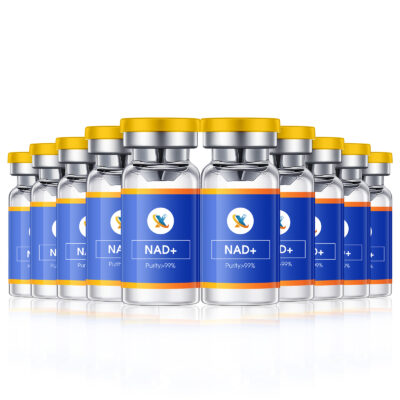
NAD+ (Nicotinamide Adenine Dinucleotide) is a vital coenzyme involved in cellular energy production, DNA repair, and metabolic resilience. pH Buffered NAD+ is formulated for enhanced stability, bioavailability, and tolerability, making it ideal for advanced wellness protocols including IV and IM administration. Buffering ensures improved comfort and reduced degradation compared to standard NAD+ preparations.
Select options
This product has multiple variants. The options may be chosen on the product page
Master Antioxidant | Detoxification, Immune Support, and Cellular Health
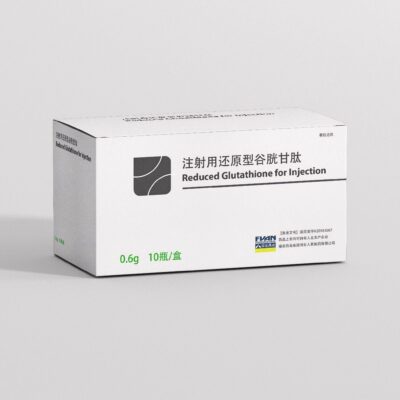
Glutathione is the body’s primary intracellular antioxidant, essential for protecting cells from oxidative stress, supporting liver detoxification, and maintaining immune resilience. This formulation provides high-purity, pharmaceutical-grade Glutathione, packaged as 10 x 600mg lyophilized vials, intended for intramuscular (IM) use after reconstitution.
Widely used in wellness, recovery, and anti-aging protocols, Glutathione plays a central role in cellular repair and defense.